The Reference
Skin Tone Chart for color analysis
A skin tone chart — also searched as a skin color chart — maps named shades, undertones, and the colors that usually flatter each complexion. Use it in daylight, then confirm with hair and eyes.
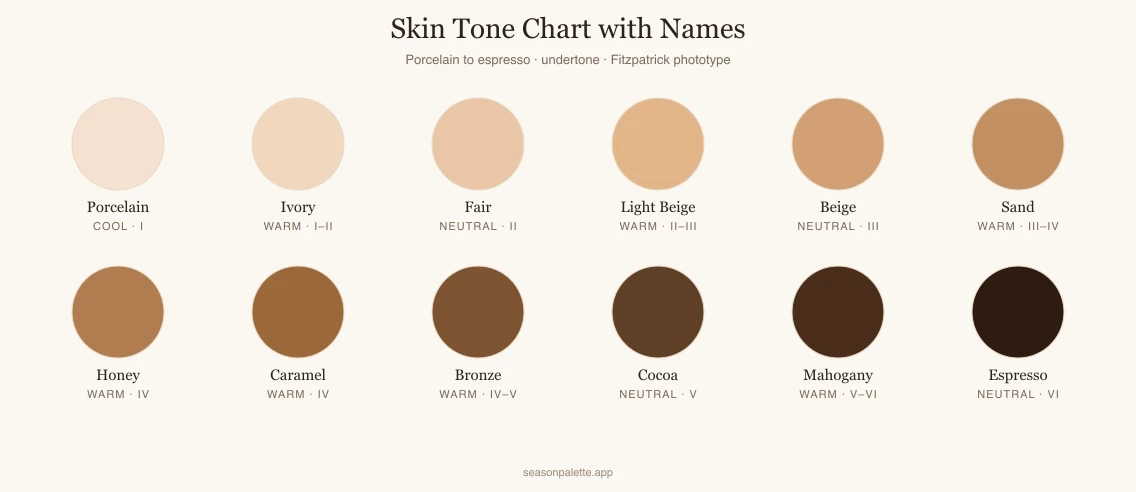
Named Shades
The full skin tone chart with names
Each shade is paired with its typical undertone and the seasonal palette that flatters it most.
The definition
What is a skin tone chart?
A skin tone chart is a visual map of human complexion along two axes. Depth is how light or deep the skin looks in daylight — porcelain, ivory, beige, honey, caramel, cocoa, espresso. Undertone is the hue underneath that does not change when you tan: cool (pink, rose), warm (peach, gold), neutral, or olive (muted green-gold). Named shades exist so two people can point at the same cell. Fitzpatrick types I–VI describe UV response, not a makeup match, which is why this chart lists both. A chart cannot assign your color season by itself. Hair value and eye color still decide whether camel or charcoal belongs near your face. That is the difference between reading this page and taking a photo in the Season Palette app.
Skin undertones chart
Depth × undertone — the two-axis chart
Find your depth row first, then the undertone column. Olive is a column, not a single medium shade — see the olive skin tone chart. Dusky is a depth name for medium-to-deep skin, on the dusky skin tone chart.
| Depth | Cool | Warm | Neutral | Olive |
|---|---|---|---|---|
| Fair · I | Porcelain, rose ivory | Ivory, peach | Fair beige | Pale sage-olive |
| Light · II | Rose beige | Light beige, peach beige | Beige | Light olive |
| Medium · III | Muted rose-tan | Sand, honey | True beige | Olive |
| Tan · IV | Cool caramel | Honey, caramel | Bronze-neutral | Warm olive |
| Deep · V | Cool cocoa | Mahogany | Cocoa | Deep olive |
| Very deep · VI | Ebony | Warm espresso | Espresso | Rich olive |
How to use it
How to find your shade on this skin color chart
- Daylight, not bathroom bulbs. Stand by a window. Phone flash and yellow indoor light both fake warmth.
- Jawline, not the inner wrist alone. Compare the chart to the side of the face. Wrists are paler and more veiny than the face you actually dress.
- Then the undertone tests. Blue-purple veins and silver looking cleaner → cool. Green-leaning veins and gold looking cleaner → warm. Both looking fine → neutral. Peach and pink foundations both looking slightly wrong → check olive.
- Foundation last. Depth first, then undertone letter. Swatch three neighbours on the jaw. The right one disappears. The skin tone chart for foundation walks that matching step by shade.
A still chart cannot see contrast between hair and skin. That is why two people on the same beige row wear different palettes. The three-question quiz on this site is a first read. A daylight photo of your face is the confirmation — the Season Palette iOS app is built for that photo, not as a replacement for this chart.
By Category
Skin tone charts by complexion
Every complexion deserves its own reference. Choose yours below.
Chart
Olive Skin Tone Chart
Olive skin tone chart with named shades, undertones, and the best colors for olive skin. Find your seasonal palette and the makeup, hair, and outfit…
Chart
Asian Skin Tone Chart
Asian skin tone chart with named shades from porcelain to deep, plus undertones and best colors. Find the seasonal color palette that flatters your skin…
Chart
Indian Skin Tone Chart
Indian skin tone chart with named shades from wheatish to deep mahogany. Discover undertones, foundation matches, and the seasonal colors that flatter…
Chart
Dusky Skin Tone Chart
Dusky skin tone chart with named shades, undertones, and the most flattering colors. Find your seasonal palette and the wardrobe, makeup, and hair colors…
Chart
Black Skin Tone Chart
Black skin tone chart with named shades from caramel to ebony. Discover undertones, foundation matches, and the seasonal colors that flatter Black and…
Chart
Skin Tone Chart for Women
A complete skin tone chart for women with named shades from porcelain to ebony, plus undertones and the seasonal colors that flatter every complexion.
Chart
Skin Tone Chart for Foundation
A skin tone chart for foundation matching: named shades, undertones (cool, warm, neutral) and the colors that flatter each. Stop guessing your foundation…
Chart
Skin Tone Chart With Names
A complete skin tone chart with names: porcelain, ivory, beige, honey, caramel, mahogany, ebony and more — plus undertones and the colors that flatter…
Answers
Skin tone chart FAQ
What is a skin tone chart?
A skin tone chart is a two-axis map of complexion: depth (how light or deep the skin looks — porcelain through espresso) and undertone (cool, warm, neutral, or olive). Named shades make the chart usable for makeup, dressing, and color analysis. It is not a season by itself — hair and eyes still decide your palette.
Is a skin color chart the same as a skin tone chart?
Yes for search. “Skin color chart,” “skin tones chart,” and “skin tone chart” all point at the same reference: named depths crossed with undertone. Artists sometimes want hex values; makeup searchers want foundation depth. This page is the shared chart; the foundation guide is a separate walkthrough.
How do I read a skin undertones chart?
Undertone is the column that does not change when you tan. Cool reads pink, rose, or blue-red. Warm reads peach, gold, or yellow. Neutral sits between. Olive is a muted green or grey-green cast that can sit on fair or deep skin. Check jawline in daylight, veins on the inner wrist, and whether gold or silver looks cleaner next to the face.
What are common skin tone names?
Porcelain, ivory, fair, beige, sand, honey, caramel, bronze, cocoa, mahogany, espresso, and ebony are the names on this chart. Olive is an undertone column; dusky is a medium-to-deep depth name used in South Asian and British English. Open those dedicated charts if that is the word you searched.
How do I use a skin tone chart for foundation?
Match depth on the jawline in daylight, then pick a base that follows undertone (pink for cool, golden for warm, olive-balanced for olive). Swatch three close shades; the right one disappears. A chart gets you to the right family. Lighting still lies — a still photo of your face is the confirmation step.
Which colors look good on my skin tone?
Cool undertones usually take jewel tones, true white, navy, and silver. Warm undertones take ivory, camel, gold, and rust. Olive prefers muted earth over candy pink. Depth changes how much saturation you can wear. Hair and eye contrast then pick the 12-season palette — the quiz and a daylight photo exist for that last step.
When a chart is not enough
Hair and eyes still have a vote
Two people on the same honey row can be Soft Autumn and Deep Winter. The missing variable is contrast. Take the color analysis quiz for a first season, or open a daylight photo in Season Palette on iOS if you want the undertone read from your actual face.