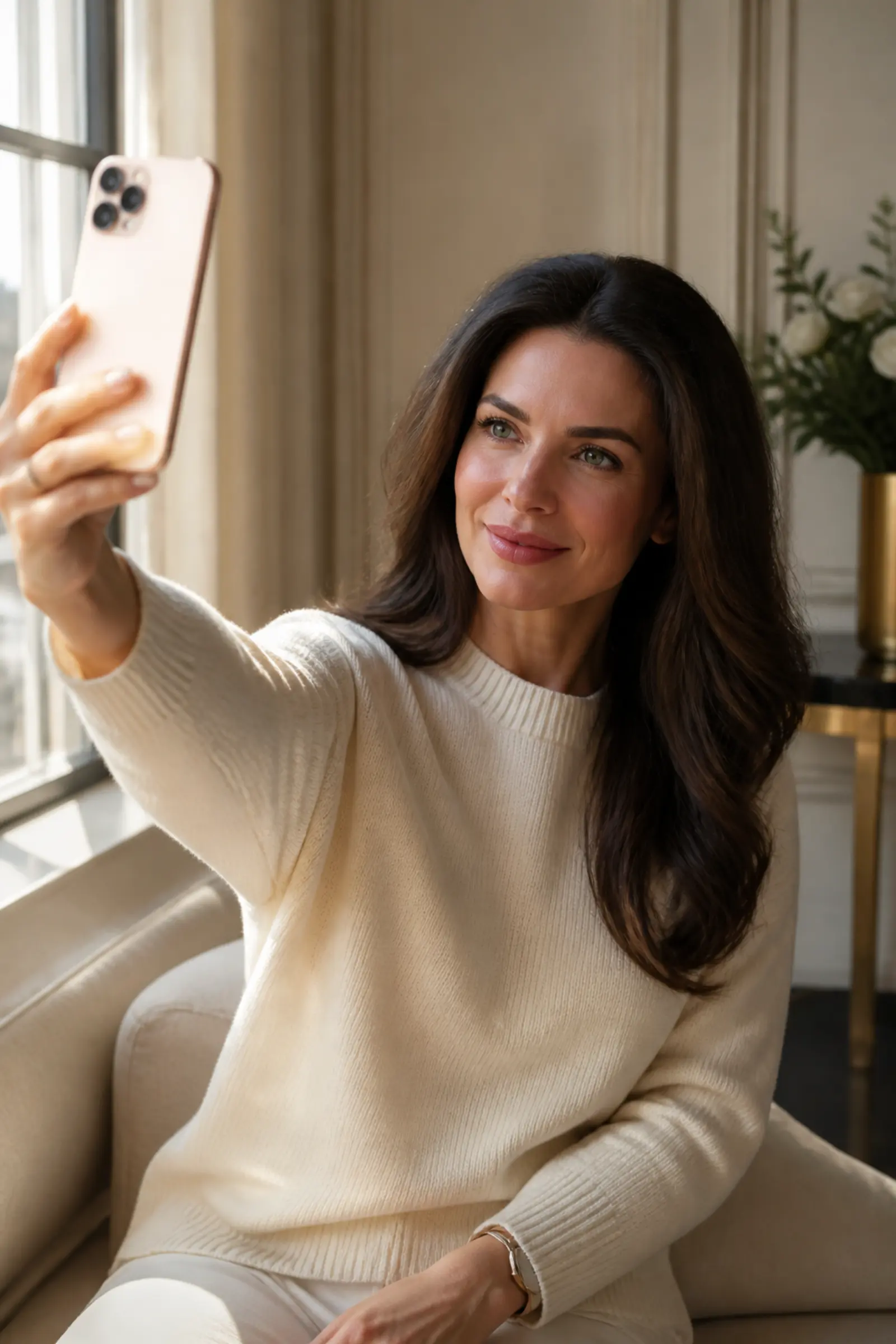
Type "best color analysis app" into the App Store and you will find filters, quizzes, and photo analyzers sharing one name. They are not the same observation. This page names the apps people actually search — Dressika, Colorwise (My Best Colors), Tone & Fit — and puts Season Palette next to them with the method, not a fake accuracy percentage. We did not run a lab drape against every competitor. Where we cite a store listing, that is a listing, not our measurement.
The short answer
What makes a color analysis app actually good?
Most apps in this space fall into one of three buckets: filter novelties, quizzes, and photo analyzers. They are not the same observation as a studio drape. Here's what to look for:
- The 12-season system. Anything mapping you to only 4 seasons (Spring, Summer, Autumn, Winter) is using outdated logic. Modern color analysis uses 12 sub-seasons.
- Undertone detection, not just skin shade. Color analysis is fundamentally about undertone (cool/warm/neutral). Apps that match foundation shades aren't doing color analysis.
- A full palette, not just a label. Knowing you're a "Soft Autumn" is useless without seeing the 25–30 colors that flatter you.
- Photo or quiz pathway. A quiz is self-report (a neighborhood). A daylight photo can confirm undertone and contrast. They are different rungs.
- Personalized recommendations. Wardrobe, makeup, hair, and jewelry suggestions based on your season multiply the value.
4 seasons, 12 seasons, Sci/ART, TCI
A useful app has to pick a grid. Carole Jackson's Color Me Beautiful (1980) popularized four seasons for a mass audience — Spring, Summer, Autumn, Winter — from earlier studio work. See the overview on color analysis in fashion. Four families are still the first cut. They are too coarse to shop with: two Autumns do not share a lipstick.
The 12-season grid used here follows the Sci/ART lineage (Kathryn Kalisz), the same axes taught by True Colour International (TCI): warm/cool, light/deep, bright/soft. Each family splits three ways. Sixteen-type schools add names on the borders. Season Palette does not ship 16. If another app labels you "True Spring" or "Warm Spring," those can be the same warmth-corner in 12 and different boxes in 16. Do not treat the string as a translation.
An app that only returns four seasons is using Jackson's public vocabulary, not a 12-season wardrobe. An app that overlays Instagram filters is not draping. An app that reads a selfie is reading pixels under whatever light you gave it — not live fabric on the face.
Named apps, side by side
| App | Grid | Method | What you pay |
|---|---|---|---|
| Season Palette | 12 seasons (Sci/ART-style) | Web: 3-question teaser. iOS: daylight photo for undertone and contrast. Neither is a studio drape. | Quiz: no signup. iOS app: paid. Not a free product. |
| Dressika (App Store) | 12 seasons (store listing) | AI photo plus wardrobe / try-on tools. They publish consultant-training claims; we did not audit those numbers. | Freemium / in-app purchase. Check the store on the day you buy. |
| Colorwise / My Best Colors (colorwise.me) | 12-season palettes; some flows start at 4 | Camera color-pick and virtual drape-style filters. Strong as a palette companion once you already have a season. | Ad-supported core; they advertise a one-time premium, not a subscription. Confirm in the store. |
| Tone & Fit (toneandfit.app) | 12 seasons (their site) | AI photo scan. They market a free scan; lighting still decides the read. | Their site lists a free scan and a paid unlock. We did not verify current IAP. |
| Generic 4-season quizzes | 4 seasons | Self-report forms. Jackson vocabulary without the 12-way split. | Usually free — and usually too coarse to shop. |
Accuracy percentages in store copy are marketing. Live draping still watches fabric on the face in north light. A photo app can confirm undertone and contrast when the light is honest. A three-question quiz names a neighborhood. Rank those three before you rank brands.
Season Palette — this site's app
We'll be transparent: this is our app. But the reason we built it is also why we recommend it. Most color analysis apps stop at a label. Season Palette gives you:
- A 3-question quiz on the web — a teaser that returns a neighborhood of seasons, not a studio result.
- An iOS app that reads a single daylight photo for undertone and contrast, then shows a 12-season palette and recommendations. Paid. Not a drape.
- 30+ curated colors per season — not just hex codes, but named tones with descriptions.
- Cross-references for lipstick, foundation, hair color, and jewelry.
Dressika, Colorwise, Tone & Fit
Dressika
Dressika is the name that currently ranks for "color analysis app" on many App Store shelves. The listing describes 12-season analysis, wardrobe matching, and try-on. That is the same job family as Season Palette: season first, then clothes. If you already have a Dressika result you trust, you do not need a second label. You need fabric or a second daylight still when the first photo was yellow indoor light. Their consultant-training accuracy claims are theirs. We do not repeat them as fact.
Colorwise / My Best Colors
Colorwise (the My Best Colors app, colorwise.me) has been in the category since 2017. The useful part is often the palette tools: pick a hem in a shop, see whether it sits in the season you already named. Virtual drape filters are still filters. They can train your eye. They do not replace a cloth on the shoulders. If their free layer is four seasons, treat it as Jackson's family name, then open the 12-way split before you dye hair.
Tone & Fit
Tone & Fit markets a fast 12-season photo scan and, on their site, a free scan with a paid unlock. Speed is not draping. A thirty-second selfie in a café will still lie about undertone. If you use it, use it the way you would use any photo app: north window, no flash, hair off the face, then check gold/silver and white/ivory against the label. Their comparison tables that crown themselves are their tables.
Filter-based AR apps
These overlay seasonal palettes on your selfie. Fun for trying lipstick. They do not analyze features — you are window-shopping overlays. Do not mistake them for analysis.
Online stylist platforms
Real human analysts review your photo and write a custom report. Quality varies wildly with the analyst, prices range $40–$200, and turnaround is 2–7 days. A great option if you want a hand-held experience and don't mind waiting.
Free vs. paid — what to expect
| Tier | What you get | Who it's for |
|---|---|---|
| Free quiz | A neighborhood of seasons + a starter palette | First-timers, casual curiosity |
| Paid app ($5–$20) | AI photo analysis, full 30+ palette, makeup/jewelry guides | Anyone serious about wardrobe |
| Online stylist ($40–$200) | Human analyst report, custom recommendations | Want a guided experience |
| In-person draping ($200–$500) | Professional analyst with physical drapes | Maximum accuracy, social experience |
How to choose the right one for you
- Start with the teaser. Take the Season Palette quiz if you want a neighborhood from self-report.
- Use a photo when the stakes rise. Clothes or hair color from the result: a daylight still in the iOS app, not three typed answers.
- Avoid filter-only apps. They're entertainment, not analysis.
- Cross-reference with at-home tests. Use the at-home observations to check undertone and contrast against what the quiz named.
The verdict
For 2026: use a web quiz if you want a neighborhood from self-report. Use a daylight photo in a paid app — Season Palette or another 12-season reader — when the stakes are hair dye or a cart. Use live fabric when the decision is expensive. Dressika, Colorwise, and Tone & Fit compete in that photo-and-palette layer. None of them, including us, should be quoted as a studio. The Season Palette iOS app is our photo path.
Frequently asked questions
What is the best color analysis app?
The best color analysis app depends on the observation you want. The Season Palette web quiz is a free teaser: three self-report questions, a neighborhood of seasons. Photo analysis lives in the paid iOS app. Filter overlays are not analysis.
Are color analysis apps accurate?
Daylight photos can confirm undertone and contrast when the light is honest. They do not match live fabric on the face. Flash, filters, and yellow bulbs move the read. A three-question quiz is a neighborhood, not a photo.
Is the Season Palette quiz a free app?
No. The web quiz is a free teaser. The Season Palette iOS app is a paid product that reads a daylight photo for undertone and contrast. A quiz and a photo analysis are different observations.
How does an AI color analysis app work?
It reads dominant pigments in a photo — skin undertone, eye color, and hair color — and maps them to a 12-season neighborhood. That is not the same logic as draping fabric on the face, and lighting is the usual failure.
Should I use an app or pay for in-person analysis?
In-person draping typically costs $200–$500 and watches live fabric on the face. A photo app can confirm undertone and contrast; it is not a studio session. A web quiz is a neighborhood. See personal color analysis near me vs online for the cost map.
Find Your Palette
Take the color analysis quiz
Discover the seasonal palette that flatters your unique features — in just two minutes.
Continue Reading