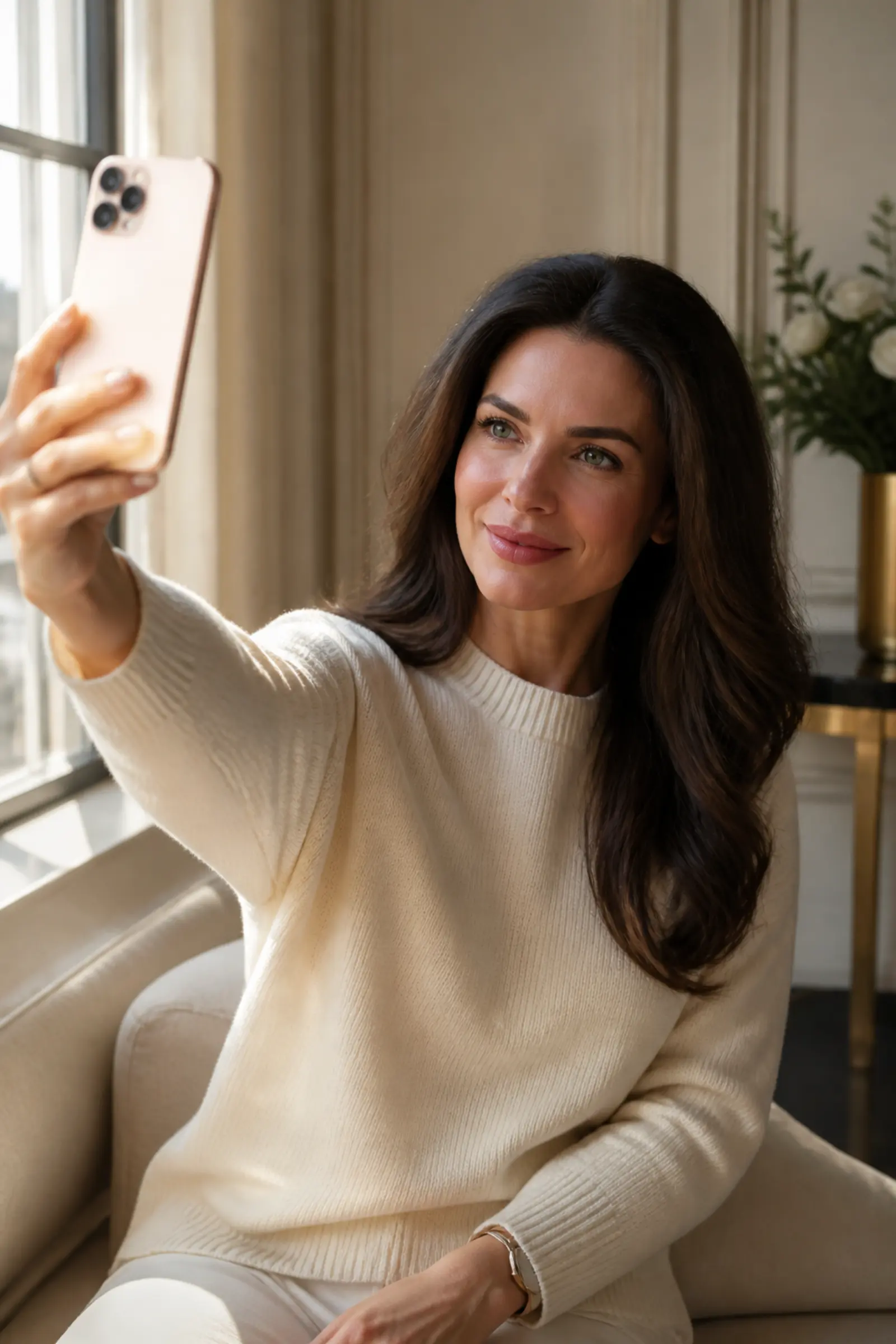
How to do color analysis on yourself is a smaller job than most checklists admit. A mirror in daylight can show temperature direction, contrast, and which scarf makes you look tired. It cannot finish a 12-season name. The useful tests are the ones that stay inside that limit.
The short answer
What you can actually see in a mirror
Three things, if the light is honest: whether cool or warm cloth steadies the face; whether hair and eyes jump away from the skin or sit in the same value; and whether a given hue introduces shadows or redness you did not have a moment ago. That is color analysis at the scale of a bathroom. It is already useful for shopping near the face.
Stand by a north-facing window if you can. Remove makeup. Pull hair back. Artificial bulbs add yellow or pink the cloth did not put there.
Why these tests exist
The observations below are older than any app. Carole Jackson's Color Me Beautiful (1980) already sent people to a window with gold and silver, white and ivory. Four families were the first cut. Public history sits on Wikipedia: color analysis (fashion). The 12-season grid (Sci/ART / TCI) did not invent a new bathroom ritual. It named which gold, which white, and how bright the cloth should be. Jackson did not replace live draping. TCI still teaches cloth on the face. A checklist in a blog is the coarsest of the three.
"How do I know what colors look good on me" is the search. The honest DIY answer is temperature and contrast — not a sub-season SKU. If two of three worsen next to the jaw (yellow-cast or grey-cast, deeper under-eyes, lips that lose blood), that color is not yours even if you like it on the hanger. That is the behavioral test. It beats a vein chart under shop lights.
What you cannot finish at home
Sub-season. Light Spring, True Spring, and Bright Spring share warmth and split on value and chroma. A phone flash, a yellow bulb, last month's hair dye, and the hope that you are the season you liked on Instagram all move the result. Draping paper on yourself is not "the most accurate at-home test." It is a coarser version of a studio you do not have.
A skin tone chart helps you name depth (fair, medium, deep) and a likely undertone column. Combined with contrast, that still leaves more than one season.
Light that does not lie
Most at-home "failures" are lighting failures. The cloth did not change. The bulb did.
- North daylight, noon-ish window, no flash. Direct sun and restaurant bulbs both yellow the skin. Phone flash flattens contrast and invents pink.
- Same spot, same hour, two cloths. Compare white to ivory, silver to gold, at the collarbone or jaw — not across the room, not yesterday vs today.
- Bare face, hair off the jaw. Leftover bronzer will vote warm. A dyed ash-blonde will vote cool. You are reading the skin, not the product.
If you only have a bathroom with a yellow bulb, wait for a window. A wrong light is worse than no test. The color analysis quiz does not see your lighting; it only scores the answers you type.
Three observations worth doing
White vs ivory (or cool vs warm cloth) at the jaw. Pure white vs cream, or a cool blue vs a warm terracotta. Which one makes the skin look more even and the eyes clearer? Cool-leaning coloring usually prefers the first pair; warm-leaning, the second. If both look fine, you may be neutral — or the light is mixed.
Silver vs gold near the jaw, same light. Not a personality test. Cool undertones usually settle under silver; warm under yellow gold; many neutrals wear both. This is the same observation as the jewelry-and-undertone guide, done once, slowly.
One honest photo of each pairing, compared later. The eye habituates. A still lets you see which take looks less tired without staring yourself into a draw.
The vein test is popular and weak. Lighting and how deep the vessel sits will make the same wrist look blue or green. Use it as a rumor, not as Test 1.
When results disagree
Treat the split as data. Neutral undertones exist. Leftover makeup, dyed hair, and mixed bulbs also split a read. Do not hand the tie to a three-question form. A quiz cannot see the conflict a mirror already showed you; it can only score the answers you type.
Sister seasons the mirror cannot split
DIY is good at family, bad at the neighbor. These pairs share enough that a bathroom will not finish them:
| You can usually see | The neighbor the mirror will not pick |
|---|---|
| Warm, light, clear — Spring family | Light Spring vs Warm Spring vs Bright Spring |
| Cool, muted — Summer family | Light Summer vs Cool Summer vs Soft Summer |
| Warm, muted, dense — Autumn family | Soft Autumn vs Warm Autumn vs Deep Autumn |
| Cool, high contrast — Winter family | Bright Winter vs Cool Winter vs Deep Winter |
| Muted, medium contrast, metal test mixed | Soft Autumn vs Soft Summer (the usual DIY tie) |
Soft Autumn vs Soft Summer is the tie most people fight. Both want muted color. They split on gold vs silver and on whether the muted red is rust or dusty rose. Hold metal at the jaw in daylight. If both metals look fine, you may be neutral — or the light is mixed. Do not hand that tie to a three-question form. Read the Soft Autumn and Soft Summer neighbor notes if that is the split you are in.
The ceiling
After these observations you should know undertone direction and a contrast band (soft vs clear, light vs deep). You should not claim Bright Spring vs Light Spring from a blog. If someone sold you that certainty from a checklist, they oversold the method.
A structured self-report
The color analysis quiz asks the same three facts you just collected — eyes, skin depth, hair — and scores them into a 12-season neighborhood. That is a fair first name for browsing palettes. It is not a drape, not a daylight photo, and it will not finish a sub-season.
When a daylight photo is the next step
If you will buy clothes or hair color from the result, self-report is not enough. A photo of the face in daylight can be read for undertone and contrast more tightly than three typed answers. That is the job of the Season Palette iOS app. It is still not live draping. For cost and what each observation buys, see personal color analysis near me vs online. If the decision is hair dye or a wedding palette, skip the quiz as the last word and drape — or at least confirm undertone from a still, not from a typed answer.
Frequently asked questions
How do you do color analysis on yourself?
In north daylight, with no makeup and hair off the face, compare a cool cloth (or pure white) near the jaw with a warm one (ivory or a warm orange). Then compare silver and gold at the same spot. You can usually see temperature direction and contrast. You cannot honestly name a 12-season sub-season from a bathroom checklist.
Are at-home color tests accurate?
They are useful for undertone direction (cool / warm / unclear) and for contrast (hair and eyes vs skin). They are not a substitute for live draping, and they are not a photo analysis. Vein-test folklore is especially weak: lighting and how deep the vessel sits will fool it.
What if the jewelry test and the white-tee test disagree?
That is common. Neutral undertones exist. Mixed lighting, leftover makeup, and hair dye also split the read. Disagreement is information, not a personal failure, and a three-question form cannot break a tie a mirror could not.
Can I find my exact season at home?
You can find a neighborhood: warm vs cool, and whether you need muted or clear color. Light Spring vs Bright Spring (or Soft Autumn vs Warm Autumn) needs live fabric on the face. A careful daylight photo can confirm undertone and contrast. A three-question form cannot break that tie. A skin tone chart helps with depth; it does not finish the season by itself.
Find Your Palette
Take the color analysis quiz
Discover the seasonal palette that flatters your unique features — in just two minutes.
Continue Reading